


Global energy demand grew more slowly in 2025 than the year before, but electricity consumption jumped by around 3%, according to the latest analysis from the International Energy Agency (IEA).
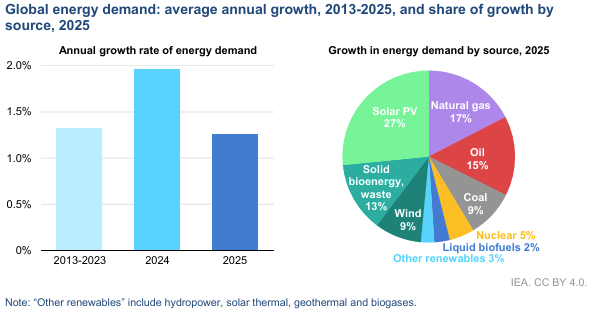
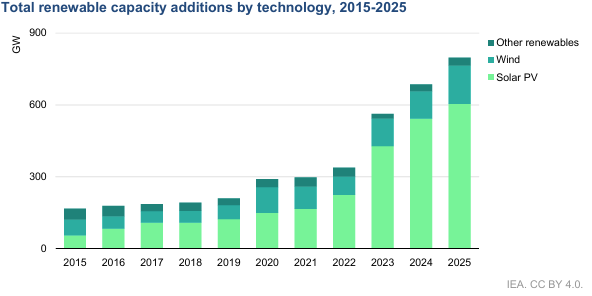
Solar energy became the single largest contributor to the growth of global energy supply, accounting for more than 25% of the total increase. This marks the first time that a modern renewable source has led the expansion of global primary energy supply, the new IEA Global Energy Review reports.
Natural gas ranked second with 17%.
Overall, renewables and nuclear energy met nearly 60% of the growth in energy demand, while electricity generation from these sources exceeded the total increase in power demand, the IEA emphasized.
Annual additions of renewable energy capacity reached a record 800 GW, with solar power making up 75% of that total.
Global energy demand up 1.3%
The report, offering a comprehensive global analysis of energy sector trends in 2025, shows that overall growth in global energy demand slowed to 1.3% in 2025, slightly below the decade‑long average of 1.4% and significantly less than in 2024.
The slowdown was driven by weaker global economic growth, milder temperatures in some regions, and faster adoption of more efficient technologies, the IEA noted.
While total global energy demand rose by 1.3%, electricity consumption increased by about 3%. The surge was fueled by multiple sectors, including buildings and industry, as well as rapidly growing demand from electric vehicles and data centers.
Battery storage as fastest‑growing technology
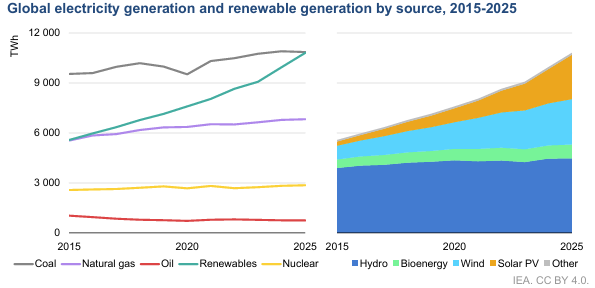
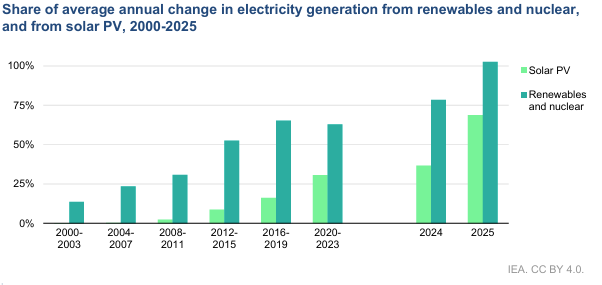
In the power sector, an additional 600 terawatt‑hours of solar generation worldwide in 2025 represented the largest structural increase ever recorded in a single year for any electricity generation technology, contributing to a global decline in coal‑fired power, according to the IEA.
Solar photovoltaics alone accounted for about 70% of the growth in electricity generation. Renewables together now nearly match global coal‑fired electricity output. In the European Union, the share of solar and wind reached 30% in 2025, surpassing fossil fuels for the first time.
Battery energy storage was the fastest‑growing technology in the power sector in 2025. Around 110 GW of new battery storage capacity added during the year exceeded previous record annual additions of natural gas capacity.
At the same time, more than 12 GW of nuclear reactors began construction in 2025, signaling renewed momentum for nuclear projects across several regions.
Electric vehicle sales up more than 20%
Global oil demand rose by 0.7%, in line with IEA projections. The continued expansion of the electric vehicle market helped limit fuel demand in road transport.
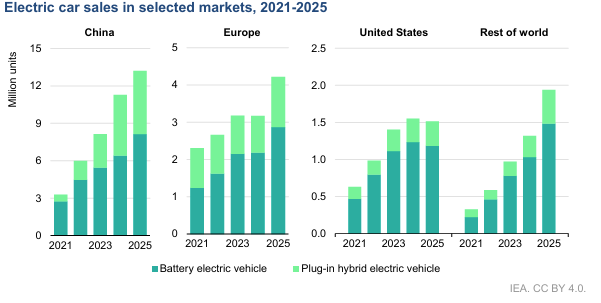
Electric car sales in 2025 grew by more than 20%, surpassing 20 million vehicles, meaning roughly one in four new cars sold worldwide was electric.
Electrification trend
Strong growth in renewables reduced coal use in China’s power generation, while coal demand rose in the United States due to high natural gas prices, the IEA reported.
Overall, coal demand growth slowed in 2025.
IEA Executive Director Fatih Birol stressed that global energy demand continued to rise in 2025 despite a complex economic and geopolitical environment. One trend, he said, is unmistakably clear, the increasing electrification of economies.
– Electricity consumption is rising much faster than overall energy demand—and one source of energy is growing much faster than all others. Solar power accounted for more than a quarter of total global energy demand growth, more than any other source, for the first time, with natural gas right behind. In today’s rapidly changing environment, countries that prioritize resilience and diversification will be best positioned to manage volatility and ensure secure, affordable energy in the years ahead – Birol noted.
Differences between the U.S. and China
The report highlights significant contrasts among major economies. U.S. energy demand growth reached its second‑highest level this century, excluding post‑recession recovery years, driven by strong electricity demand from data centers, robust industrial activity, and a colder winter.
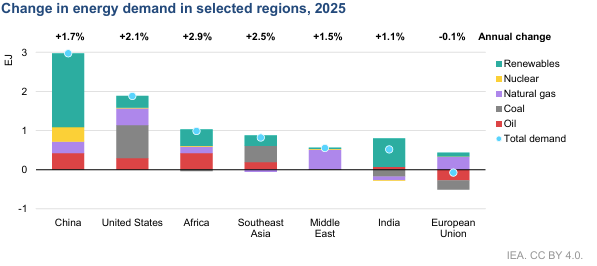
Meanwhile, China accounted for the largest share of global energy demand growth last year, but its growth rate fell sharply to 1.7% as renewables displaced less efficient coal, alongside further gains in energy efficiency.
Slower growth in CO₂ emissions
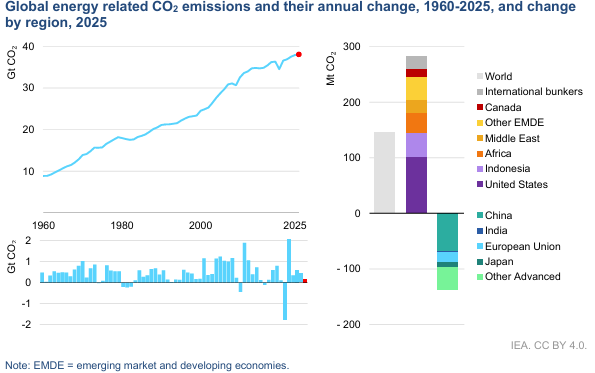
At the same time, growth in global energy‑related CO₂ emissions slowed in 2025 to about 0.4%.
Since 2019, the cumulative deployment of low‑emission technologies has annually avoided fossil fuel consumption equivalent to the entire energy demand of Latin America, the IEA noted.
Taken together, technologies such as solar, wind, and heat pumps today reduce natural gas demand by an amount equal to half of total annual global LNG exports.